Delectus Wines · Est. 1995 · Napa Valley Revival
Born from
eight generations
of instinct.
Delectus was founded in 1995 on a single conviction: that the most honest wines come from land chosen carefully and left largely alone. Thirty years on, that conviction has not changed. The methods have only deepened.
Explore the Current ReleasesThe Founding Story
A winery built on love — for a valley, and for a craft.
Gerhard & Linda Reisacher · Founders, 1995
Gerhard Reisacher arrived in Napa Valley at nineteen years old, on what was supposed to be a visit. He never left. The son of an Austrian winemaking family with roots stretching back eight generations, Gerhard recognized something in the Napa Valley light — the way it fell across the hillsides in October, the way it made the basalt shimmer along the ridge above Oakville — that reminded him of home, except bolder.
Together with Linda Butler, he founded Delectus Winery in 1995 with a commitment that has defined every bottle since: handcrafted wines, unfined and unfiltered, with no intervention that the vineyard itself had not already approved. The earliest Delectus designations were deeply personal — the Cuvée Julia, named for the couple's daughter, and French Wedding, a name carried through the brand's history. The current revival returns these designations to the bottle, with a label that traces the same mountain crest in pink die-cut and gold foil that has defined the Delectus identity since the founding.
Philosophy
Unfined. Unfiltered. Unhurried.
From the beginning, Delectus built its reputation on a refusal to compromise. No spinning cone. No reverse osmosis. No concentrate. No additives engineered to smooth out what the vintage was actually saying. The result is wine that tells the truth about where it came from — and about the year in which it was grown.
The current portfolio honors that founding standard with four expressions sourced from six of Napa Valley's most geologically compelling appellations: the gravelly Rutherford Bench, the alluvial corridor of Oakville, and the volcanic mountain terrain of Atlas Peak, Howell Mountain, Diamond Mountain District, and Mount Veeder. Each wine is a document of its site.
Our Commitments
No fining. No filtration.
Every wine leaves the winery exactly as the vineyard and cellar made it — texture, complexity, and all. Clarity through patience, not through intervention.
Appellation specificity
Each designation is tied to a named AVA. We do not blend away the geography — we let it speak, and we step back.
Hand work throughout
Every cluster is picked by hand, sorted by hand, and evaluated barrel by barrel before a drop is bottled. The human judgment at each step is irreplaceable.
Time over technique
We do not rush what the cellar is doing. The wines are released when they are ready. It is the one input no budget can accelerate.
Napa Valley Appellation Sourcing
Four wines. From the bench to the summit.
Oakville
200–600 ft · Gravelly Loam & Alluvial Soils
The most celebrated corridor on the valley floor. Well-drained gravelly loam shaped over millennia by Napa River alluvial deposits, moderated by marine influence from the San Pablo Bay. The home of the 2025 Sauvignon Blanc — a rare expression of the variety from one of California's premier Cabernet appellations.
Rutherford
100–500 ft · Bench Soils & Rutherford Dust
One of California's most historically significant Cabernet appellations. The Rutherford Bench has produced wines defined by the same fine-grained, dust-textured tannin signature for over a century. The home of the 2023 French Wedding.
Atlas Peak
1,400–2,600 ft · Volcanic Tufa & Obsidian
Above the fog line, with diurnal swings of 40–50°F that compress the season and intensify the fruit. Volcanic tufa and fractured basalt drain hard, stressing vines into thick-skinned berries with a mineral iron quality no valley site can replicate. The home of the 2023 Bear Crossing.
Howell Mountain
1,400–2,200 ft · Volcanic Red Soils & Rhyolite
The benchmark for age-worthy Napa Cabernet. Red volcanic clay over rhyolite bedrock and elevation above the fog line produce wines of formidable structural depth and graphite-toned tannin. The 60% anchor of the Cuvée Julia Mountain Blend.
Current Release · 2023–2025
Four designations. Four truths.
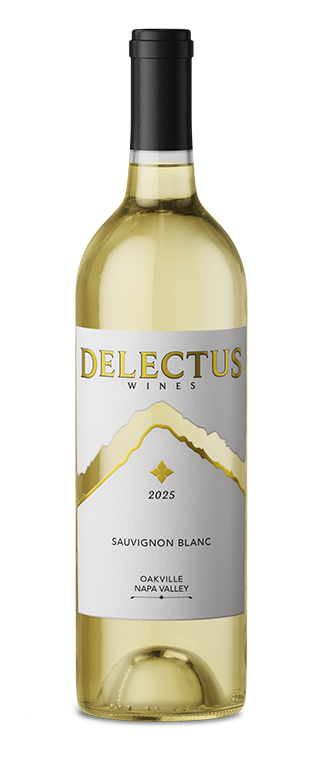
Sauvignon Blanc · Oakville · Napa Valley
2025 Oakville Sauvignon Blanc
Sauvignon Blanc from Oakville is itself a rare proposition — a varietal more typically associated with cooler corridors, rendered here in one of the warmest and most celebrated Cabernet appellations in the valley. The 2025 release is hand-harvested from a single block in the heart of Oakville, where the well-drained gravelly loam soils — shaped by Napa River alluvial deposits — produce a Sauvignon Blanc of unusual density and aromatic complexity for the variety. Notes of precision-cut citrus, white nectarine, Meyer lemon, and warm stone give way to a thread of lemongrass and oyster shell on the palate. Raised entirely in stainless steel on its lees for five months, the wine has a brisk, mouthwatering acidity and a mineral-driven finish of uncommon length. A white wine built to age as well as to drink young.
92 Points, Decanter
A lovely, bright, and citrusy and tropical-fruited Sauvignon Blanc with sea grass aromatics and creamy citrus, orchard, and tart pineapple core on the palate, all framed by racy acidity and wet stone mineral tension on the finish.
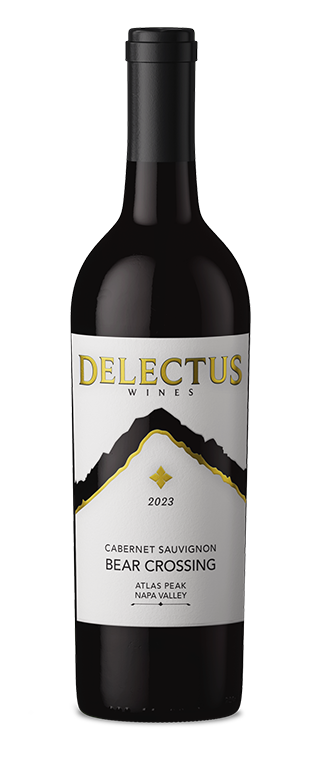
Cabernet Sauvignon · Atlas Peak · Napa Valley
Bear Crossing
Atlas Peak does not make wine easy, and the 2023 Bear Crossing is proof of what that resistance produces. The vineyard block sits above 1,800 feet on volcanic tufa and fractured basalt — soils that drain aggressively, ripen slowly, and concentrate every molecule of flavor into smaller and smaller berries. The result is a wine of formidable density that still carries lift. Aromas of dark plum, crushed violet, iron ore, dried lavender, and cedar give way to a structured palate with firm, polished tannins and a finish that persists well beyond a minute. Aged 22 months in French oak — 60% new from three cooperages — the wine has the weight of the mountain it comes from and the patience to reveal itself slowly over the next decade. Named for the wildlife corridor that defines the ridgeline above the source block.
98 Points, The Tasting Panel
Sage, mint, espresso, and graphite team up for a concentrated, textural furry plushness. Cocoa dusts the palate and blackberries reach deep into the wine’s intensity; wildly powerful, with a poetic soul.
93 Points, Decanter
A rich, ripe, full-throttle mountain Cabernet offering up fragrant toasty oak notes interlaced with dark cocoa powder nuances. Soft, supple tannins and ultra silky darkberry fruit are effusive and beautifully ripe to the point of perfect sweetness, framed by wild herbaceous notes that are utterly enticing. The Atlas Peak tannins are perfectly integrated making this an ideal weeknight red.
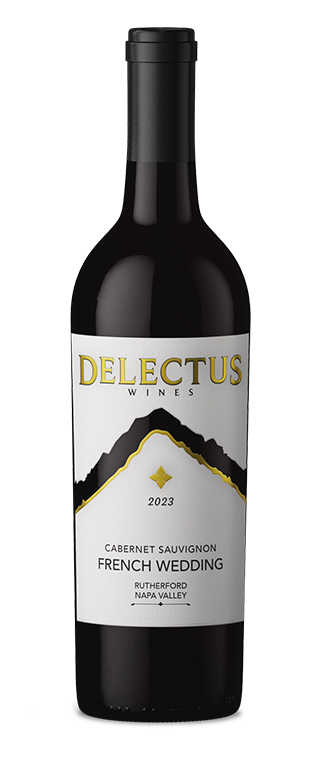
Bottle Shot
Cabernet Sauvignon · Rutherford · Napa Valley
French Wedding
A name carried forward from the original Delectus era, the 2023 French Wedding returns to Rutherford with the same standard set thirty years ago. From a single block on the Rutherford Bench — the gravelly alluvial corridor on the western edge of the valley floor that has produced some of California's most age-worthy Cabernets for over a century — French Wedding is a study in classic Napa structure rendered with restraint. The nose opens with black cherry, cassis, crushed rose petal, dried sage, and cocoa nib. The palate carries the appellation's signature dust — that fine-grained, slightly powdery tannin texture that no other Napa AVA quite reproduces — through a long mid-palate and a finish that fades reluctantly. A wine that has the patience of a Rutherford Cabernet and the precision of a winery in its thirtieth vintage.
95 Points, Decanter
A nicely structured, perfumed red wine building in the glass with black cherry and blackberry fruit, a hint of sous bois, or that kind of warm foresty redwood grove and earth aroma, and dusty clay mineral note, all framed by dusty Rutherford tannin that has a chocolaty quality to it, and a rich tapestry of velvety soft dark berry fruits, creme de cassis, and warm spices through the mineral-scented finish.
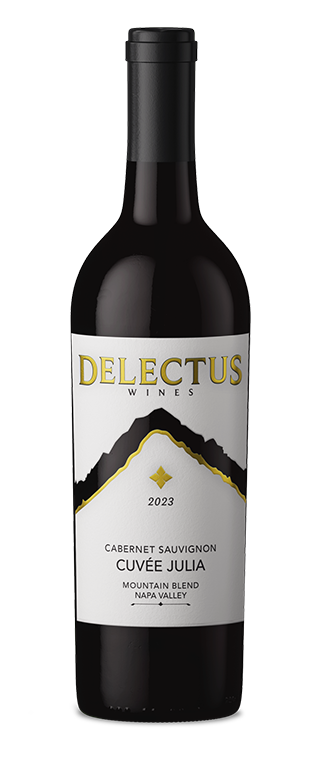
Bottle Shot
Mountain Blend Cabernet · Napa Valley
Cuvée Julia
The Delectus flagship and the wine that now carries the most personal designation in the portfolio. The Cuvée Julia name — first attached to the brand's earliest small-production releases and named for the founders' daughter — has been brought forward to this 2023 Mountain Blend, a wine assembled across three of Napa Valley's most demanding mountain appellations. Each of the source lots was evaluated independently across two rounds of blind tasting before the final assemblage was determined at the blending table in early 2025. Howell Mountain — the dominant 60% component — anchors the wine with its signature graphite-toned tannin and dark fruit density. Diamond Mountain District delivers tannic precision and structural lift. Mount Veeder, the smallest contributor, brings the wine its longest dimension: a mineral, slightly austere undertone that pulls the finish past the minute mark. Aromas of black cherry, dark chocolate, crushed stone, dried herbs, and cedar lead into a palate of extraordinary length and a finish that fades reluctantly. Aged 26 months in French oak, 70% new. Cellaring through 2035 recommended.
94 Points, Decanter
Power and elegance come together in this robust Cabernet, featuring fragrant rose petal nuances, earth and red volcanic mineral notes. Full-bodied with rich, muddled strawberry and raspberry fruit notes layering themselves deeply on the palate, a firm spine of racy acidity and ultra-fine, gravelly tannins that carry the lasting, mouthwatering finish.
Bottle Shot
Robert
Smith
Head Winemaker
B.S. Enology — Fresno State University
Harvest Internship — Quintessa, 2006
Seven Stones · Krupp Brothers · Covert Estate
Harvest — Bon Cap Winery, South Africa
Estate Winemaker — Quixote Winery, Stags Leap District · 2011–present
Mentors: Aaron Pott · Julian Fayard · Philippe Melka
The Winemaker
"The cellar is a room where you can do too much, very easily. The discipline is in deciding, every day, what not to do."
Robert Smith did not arrive at winemaking by a straight road. A native of Modesto, California, he began his career as a research intern at Gallo, drawn initially to the science of fermentation rather than the romance of it. It was a short distance from craft IPAs to Napa Valley Cabernet — and once he arrived, he never looked back.
His formative years in the cellar at Quintessa, followed by positions at Krupp Brothers and Covert Estate, gave Smith an uncommonly thorough understanding of how Napa's varied appellations express themselves in both the tank and barrel. A harvest season in South Africa at Bon Cap exposed him to a radically different approach to extraction and élevage — one that permanently influenced the restraint and textural precision evident in his wines today.
Since 2011, Robert has served as Estate Winemaker at Quixote Winery in the Stags Leap District, where working alongside consulting winemaker Philippe Melka, he has built a reputation for Cabernet Sauvignon and Petite Sirah of precision and structural depth. His approach is old-world in its patience — long macerations, meticulous barrel selection across multiple cooperages, and no bottling before the wine is ready. His work with Delectus represents a return to mountain fruit, and to the kind of site-driven winemaking that shaped his palate from the beginning.
An avid surfer, Robert approaches winemaking the way he approaches a swell — with patience, attention, and the understanding that the best moment is never the one you force.
Join the List
Small production.
Just over 1,600 cases
across four wines.